
Water Damage Restoration in Dallas-Fort Worth, TX
DFW Water Damage Repair is a water damage restoration company serving homes and businesses across Dallas-Fort Worth, TX. When a pipe bursts, a water heater fails or rain gets inside, the crew pumps it out, dries the structure with commercial equipment and documents everything for your insurance claim. One call covers the whole job, from the first extraction to the final moisture check.

Water damage restoration services in Dallas-Fort Worth
Every job starts the same way: stop the leak, get it out, dry what it touched. The water damage restoration service pages explain what happens in each situation and what affects the cost.
Emergency water extraction
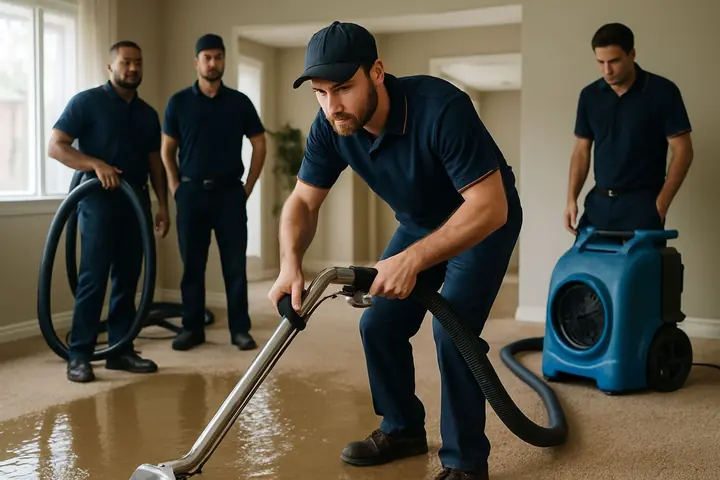
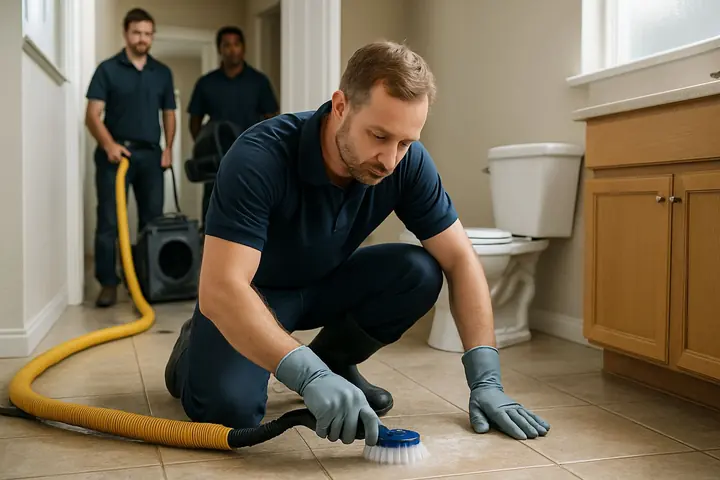
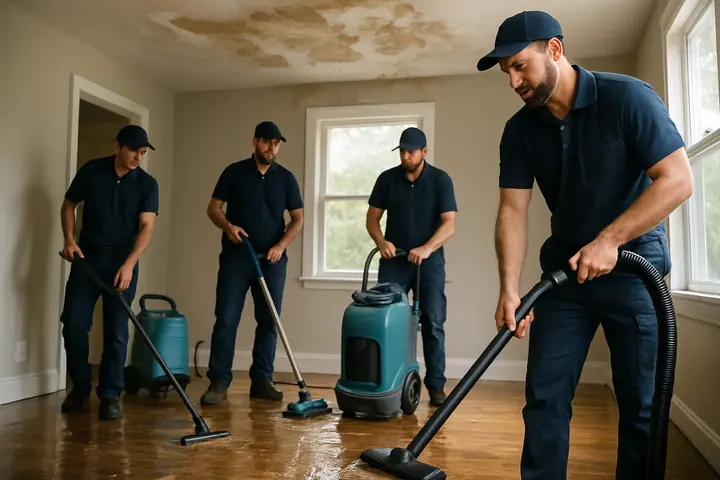
Standing pools pumped and vacuumed out of floors, carpet and cavities the same day, before they soak into the structure.
Flood cleanup
Pump-out, removal of contaminated materials, disinfection and drying after storm runoff or groundwater came inside.
Burst pipe and leak cleanup
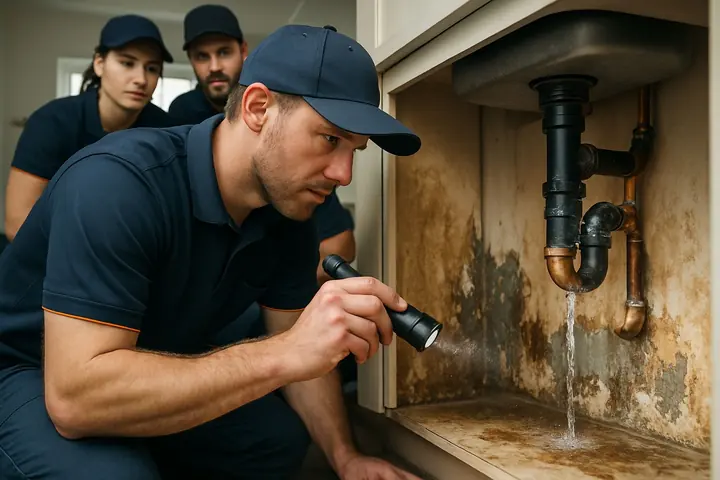
Cleanup and drying after a supply line, a heater tank, an appliance hose or a slab leak ran loose inside the house.
Structural drying and dehumidification
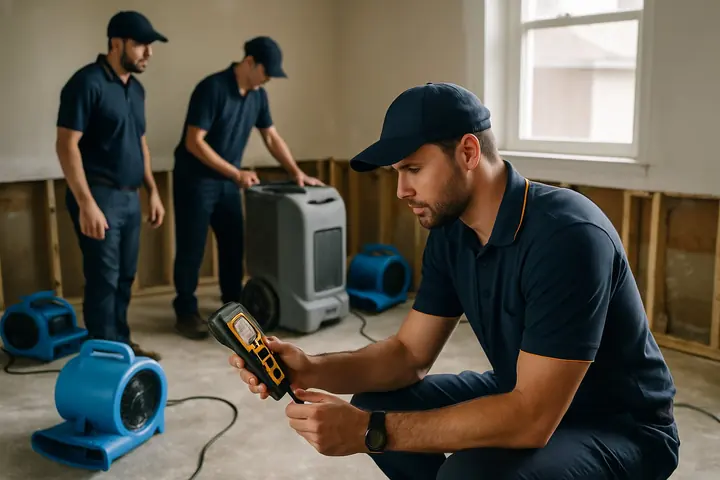
Commercial air movers and dehumidifiers with daily moisture readings until walls, floors and framing are dry to the meter.
Sewage backup cleanup
Removal, disinfection and drying after a sewer line backup or toilet overflow, done with protective gear and proper disposal.
Storm and roof leak cleanup
Drying and cleanup after wind-driven rain, a roof leak or a fallen tree let rain into ceilings, attics and walls.
Mold prevention after water damage
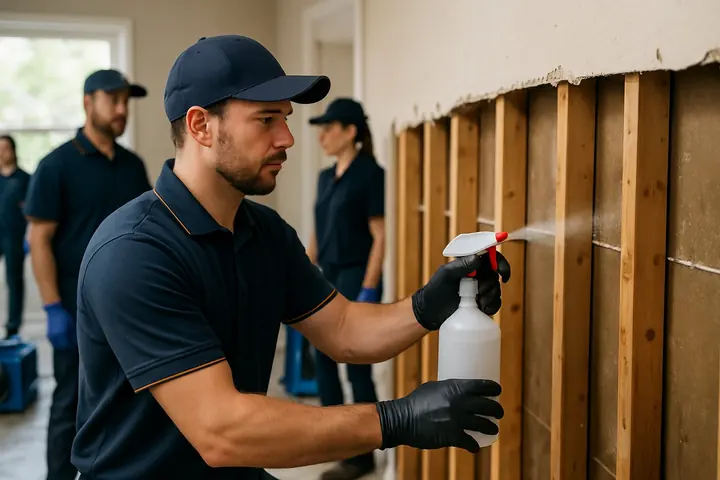
Antimicrobial treatment, complete drying and verification so a leak or flood does not become a mold problem behind the walls.
What people in Dallas-Fort Worth have said
-
We needed standing water removed, and I was worried about the floor underneath. The team addressed both questions instead of focusing only on what we could see. The updates were brief but useful.
-
We had a lot of muddy water to clean up after heavy rain. DFW Water Damage Repair gave us a plan and updated us as the work moved along. It was a messy week, but communication was never another problem.
-
A pipe broke while we were away, so coming home was a shock. The crew took the time to look beyond the obvious wet spot and told us what the cleanup would involve.
From your call to a dry house
- 1
You call, we ask five questions
Where the leak is, whether it is still running, how clean or dirty it is, how long it has been there and how many rooms it reached. That sets the crew size and the equipment.
- 2
A crew arrives with the truck
Extraction units, air movers and dehumidifiers come on the first trip. The technician maps the wet area with a moisture meter and photographs it before touching anything.
- 3
Extraction, then drying
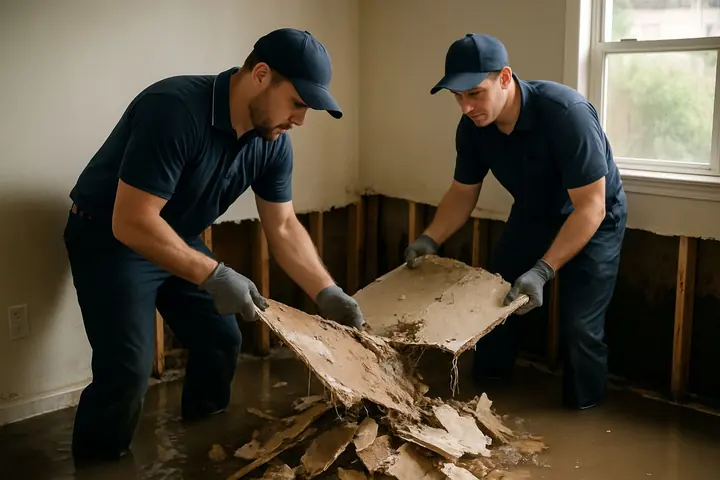
Standing pools go first. Then wet carpet pad, soaked drywall and insulation that cannot be saved come out, and the drying equipment runs for as long as the readings say, usually three to five days.
- 4
Daily readings and a final report
Someone checks the moisture numbers every day and moves equipment as rooms dry. You get the photos, the readings and the equipment log for your insurer.
Why Dallas-Fort Worth homeowners call DFW Water Damage Repair for water damage restoration
Water damage is a race against the materials in your house. Carpet pad holds moisture for days, drywall wicks it upward a few inches every hour, and the cavity behind a baseboard stays wet long after the surface feels dry. The difference between a two-day dry-out and a gutted room is usually how fast the extraction started.
We keep it plain. The technician tells you what has to come out and what can be saved, shows you the moisture readings, and gives you the same numbers your insurance adjuster will ask for. If a wall reads dry, it stays. If it does not, we say so and explain why.
You deal with one company for the whole water damage restoration. Extraction, drying, demolition of what cannot be saved, odor control and the paperwork all come from the same crew, so nothing falls between two contractors.

Water damage restoration in Dallas-Fort Worth: what the climate does to a house
North Texas gets its water damage in bursts. Spring brings severe thunderstorms and some of the most frequent hail in the country, which opens roofs and lets rain into attics. Winter brings the occasional hard freeze, and the February 2021 storm burst pipes in homes across the region that had never seen one fail before.
The soil is expansive clay, and slab foundations move with it, which is why slab leaks are a routine call across Dallas-Fort Worth. Attic water heaters and attic air handlers are common in the housing stock, so a failure upstairs soaks insulation, ceilings and walls on the way down.
Areas we serve around Dallas-Fort Worth
Water damage restoration crews cover 86 ZIP codes across the Dallas-Fort Worth area. Pick your city for local response details, or call and give us your address. The number beside each city is how many of those ZIP codes fall inside it.
How fast can you get to my house?
For an active leak, the same day, and usually within a few hours depending on where you are in the Dallas-Fort Worth area and how many calls came in that hour. Tell us on the phone whether it is still running; if it is, we walk you through shutting it off while the crew drives.
What should I do before the crew arrives?
Shut off the supply at the fixture or the main if it is still flowing, and turn off the power to the wet area at the breaker if outlets or cords are wet. Move small furniture and rugs out of the wet zone. Do not run fans on sewage or floodwater. Take photos before anything is moved.
Will my homeowners insurance cover this?
Most policies cover water damage restoration after a sudden and accidental event, such as a burst pipe or a failed appliance, and do not cover flooding from outside unless you hold a separate flood policy. We cannot tell you what your policy says, but we document the job the way adjusters expect: photos, moisture readings, equipment logs and a scope of the work.
How long does drying take?
Three to five days is typical for a room with wet carpet and drywall. Hardwood floors, plaster walls and rooms that sat wet for days take longer. The equipment stays until the moisture readings match the dry parts of the house, and you see those numbers each day.
Do you handle the repairs after the drying?
Ask when you call. The scope of repairs after drying depends on what had to be removed. Either way you get a written list of what came out, so whoever rebuilds has exact quantities.
Can I dry it myself with fans?
A small clean spill on tile, yes. Anything that reached carpet pad, drywall or the underside of flooring, no. Household fans move air over the surface while the moisture stays inside the material, and mold can start within a day or two. A moisture meter tells the difference, and the estimate visit is free.
Water damage in your home right now?
Call and tell us what you see. We will tell you what to do in the next ten minutes and when the crew can be there.