Structural Drying and Dehumidification in Dallas-Fort Worth, TX
DFW Water Damage Repair provides structural drying and dehumidification in Dallas-Fort Worth, TX, the phase that turns a wet building back into a dry one. After extraction, the water left inside drywall, subfloor, framing and concrete has to be pulled out as vapor, which takes commercial dehumidifiers, directed airflow and daily measurement. Structural drying done right is the difference between a room that is fixed and a room that grows mold behind new paint.
Rather type than talk? Request a callback online
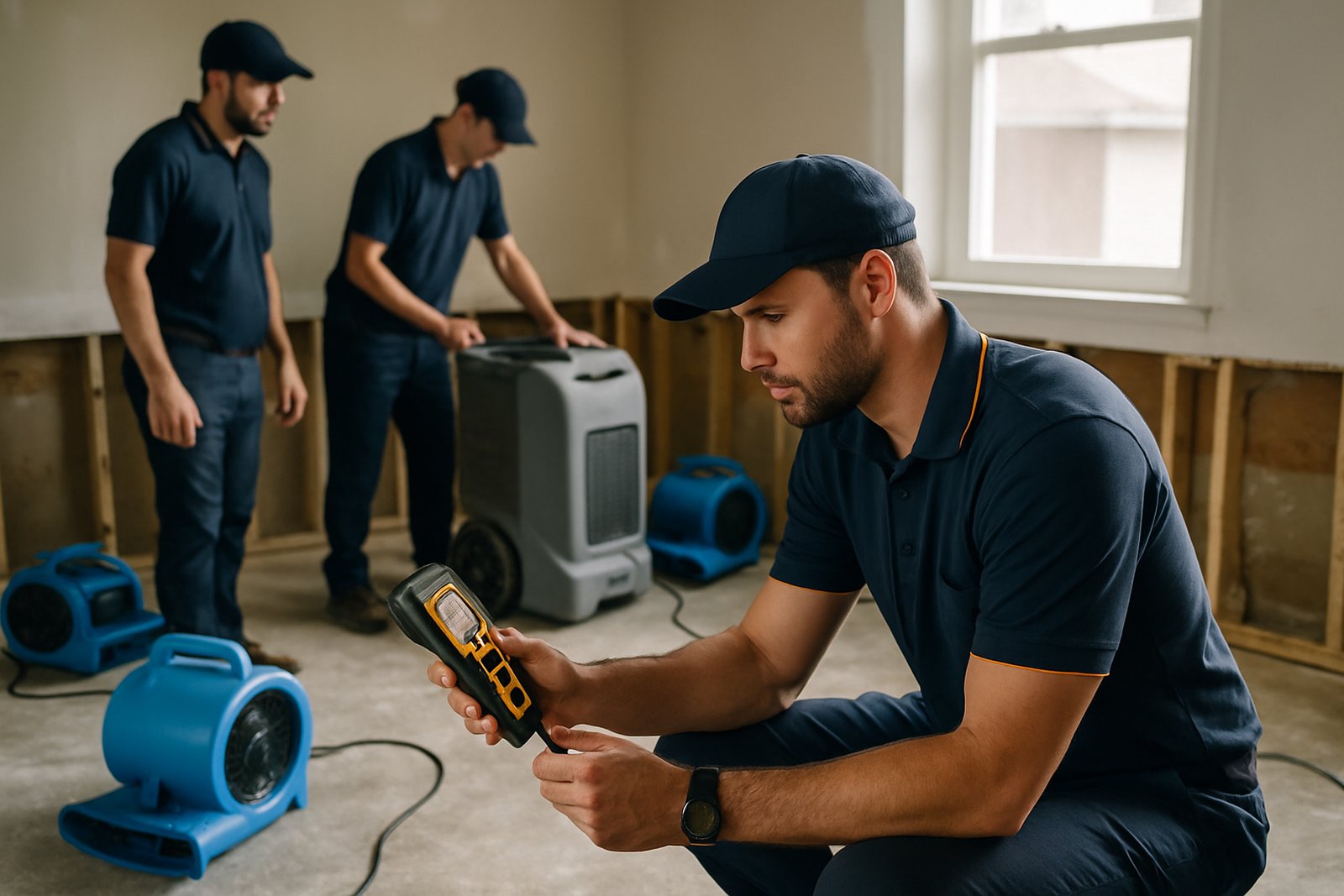
How structural drying works in Dallas-Fort Worth
Water leaves a material only as vapor, so drying is about moving dry air across every wet surface and then removing the moisture that air picks up. Air movers do the first part. Commercial refrigerant or desiccant dehumidifiers do the second, pulling gallons of water a day out of the room air and draining it away. The two are balanced against the size of the room and the humidity outside.
In the Dallas-Fort Worth area the outdoor humidity is often high, so opening windows works against you. The wet rooms are closed off, the equipment runs continuously, and the technician measures temperature, humidity and material moisture every day. Equipment is moved as areas dry, and removed when readings match the dry reference points in the building.
What can be dried in place and what cannot
Framing lumber, plywood subfloor, concrete, plaster and drywall that has not swollen can usually be dried in place, sometimes with small holes drilled at the base of the wall or a baseboard removed so air reaches the cavity. Hardwood floors can often be saved with a floor drying mat system if the work starts early.
Carpet pad, wet insulation, particleboard, swollen laminate and drywall that has sagged or been under contaminated water do not dry back to what they were and are removed. Every removal is listed with measurements so the rebuild is exact.
What affects the price of structural drying
Drying is billed by equipment and days. The moisture readings, not a calendar, decide both.
Number of air movers and dehumidifiers
Set by the square footage of wet surface and the volume of the rooms.
Days of drying
Three to five days is common. Hardwood, plaster and rooms that sat wet run longer.
Specialty drying
Floor mat systems for hardwood, injection drying for wall cavities and heat drying for dense materials add equipment.
Monitoring visits
A daily visit to read the meters and reposition equipment is part of the job.
Structural drying and dehumidification questions from Dallas-Fort Worth homeowners
How do you know when it is dry?
The moisture meter is compared against readings from unaffected parts of the same building, which is the dry standard for that house. When the wet areas match, the equipment comes out. You see the numbers each day.
Can I turn the equipment off at night?
Please do not. Drying is continuous; a night off can add a day to the job. The equipment is loud, and we will place it to keep bedrooms usable where possible.
Why not just open the windows?
On a humid Dallas-Fort Worth day the outside air can carry more moisture than the air in the room, so the room gets wetter. Closed rooms with dehumidifiers dry faster and predictably.
Can hardwood floors be saved?
Often, if drying starts within the first day or two and the boards have not buckled. A floor drying mat system pulls moisture through the boards. Badly cupped or buckled floors are replaced.
Other water damage services in Dallas-Fort Worth
Most jobs touch more than one of these. The same crew handles all of them.
Emergency water extraction
Standing water pumped and vacuumed out of floors, carpet and cavities the same day, before it soaks into the structure.
Flood cleanup
Pump-out, removal of contaminated materials, disinfection and drying after storm water or groundwater came inside.
Burst pipe and leak cleanup
Cleanup and drying after a supply line, water heater, appliance hose or slab leak let water loose inside the house.
Sewage backup cleanup
Removal, disinfection and drying after a sewer line backup or toilet overflow, done with protective gear and proper disposal.
Storm and roof leak cleanup
Drying and cleanup after wind-driven rain, a roof leak or a fallen tree let water into ceilings, attics and walls.
Mold prevention after water damage
Antimicrobial treatment, complete drying and verification so a water event does not become a mold problem behind the walls.
Structural drying and dehumidification across the Dallas-Fort Worth area
Available in every city we serve. Response time depends on your distance from the crew at the moment you call.
Not sure how bad it is?
Describe it on the phone. If it needs a visit, someone comes out with a moisture meter and gives you a straight answer.